What Is Black Seed Oil?
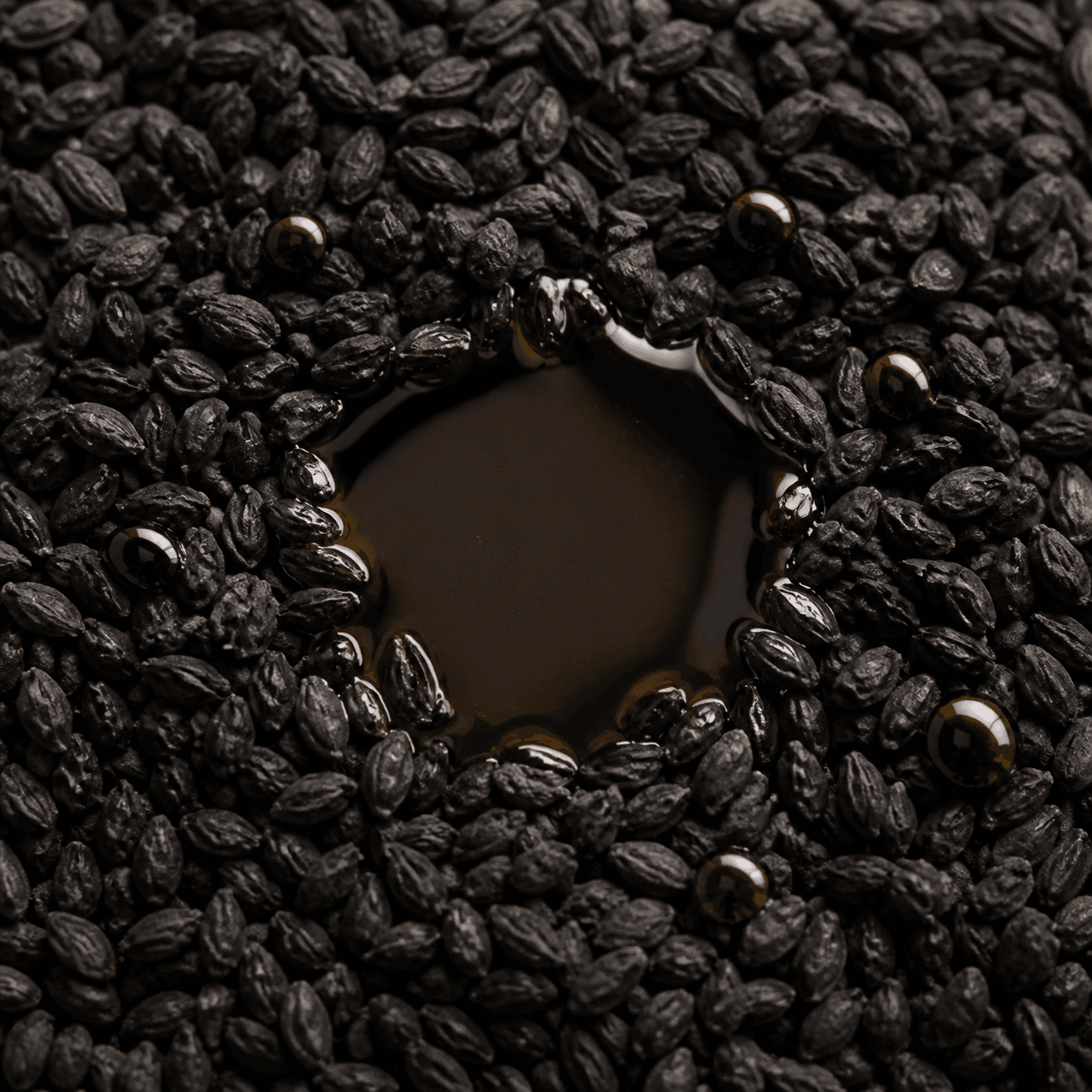
Black seed oil is pressed from the small, matte-black seeds of Nigella sativa, a flowering plant native to Southwest Asia, the Middle East, and the Mediterranean. You may also see it called black cumin seed oil, kalonji oil, or—in classical Arabic texts—habbat al-barakah, "the seed of blessing."
Its history is remarkable. Nigella seeds appear in traditional Ayurvedic and Unani practice, in ancient Egyptian records, and across centuries of Mediterranean and Middle Eastern home use. Long before anyone could name a single molecule inside the seed, households were pressing it, infusing it, and passing it down as a daily staple.
Thymoquinone: The Compound Researchers Keep Coming Back To
When modern laboratories began analyzing Nigella sativa, one constituent stood out: thymoquinone (TQ). It is the most extensively examined active compound in black seed oil and the main reason the ingredient graduated from folk tradition to peer-reviewed literature.
In preclinical research, thymoquinone has been studied for its antioxidant activity—its capacity to interact with the free radicals generated by normal metabolism, exercise, and everyday environmental stress. A well-made black seed oil preserves this naturally occurring TQ rather than stripping it out during processing.
- Thymoquinone (TQ) — the signature bioactive quinone studied for antioxidant properties
- Essential fatty acids — black seed oil is naturally rich in linoleic and oleic acids
- Aromatic constituents — including p-cymene and carvone, which give the oil its distinctive character
What Do Clinical Studies Say About Black Seed Oil?
Here is what makes Nigella sativa unusual among traditional botanicals: it hasn't just been used—it has been tested. Dozens of published human clinical trials and multiple systematic reviews have examined black seed preparations in areas that matter for everyday wellness:
- Immune function — human studies have explored how Nigella sativa supplementation relates to markers of normal immune activity.†
- A healthy inflammatory response — clinical research has measured inflammatory markers such as C-reactive protein in adults taking black seed preparations.†
- Metabolic wellness — randomized trials have looked at black seed alongside markers of healthy metabolism in generally healthy adults.†
- Antioxidant status — studies have examined how supplementation relates to the body's own antioxidant defenses.†
It's worth being precise about what this body of research is: these are studies on black seed oil and Nigella sativa preparations as ingredients, conducted by independent researchers around the world. Results vary by study design, dose, and population, and researchers consistently call for larger trials. But few botanicals can point to a comparable stack of published human data—which is exactly why we built our formula around it.
Black Seed Oil Nutrition: More Than Its Active Compounds
Beyond thymoquinone, black seed oil is a genuinely nutritious seed oil. Its fatty acid profile is dominated by linoleic acid (an omega-6 essential fatty acid your body cannot make on its own) and oleic acid (the same monounsaturated fat that anchors olive oil's reputation). The seeds themselves also contribute trace minerals and plant sterols.
This matters because a botanical oil isn't a single molecule—it's a matrix. The traditional practice of taking the whole pressed oil, rather than an isolated extract, keeps that matrix intact.
How to Take Black Seed Oil (Without the Taste)
Anyone who has tried raw black seed oil knows its flavor: peppery, pungent, and persistent. Traditional users mixed it with honey for a reason. The modern answer is the softgel—a measured serving of oil sealed in a tasteless capsule that travels well and fits any morning routine.
- Pick one consistent time of day—consistency beats intensity with botanicals.
- Take softgels with food, the way traditional users paired the oil with meals.
- Follow the serving directions on the finished label, and keep the pouch somewhere visible.
- Give it time. Clinical studies on botanicals typically run for weeks, not days.
Curious how black seed oil pairs with other botanicals? Read our companion guide to oregano oil and carvacrol—the second half of the NUTRAYLA® formula.
What to Look For in a Black Seed Oil Supplement
- Cold-pressed oil from Nigella sativa seeds, not a diluted blend of carrier oils
- A clear label stating the serving size and the full ingredient list
- A sealed, resealable format that protects the oil from light and air
- A straightforward guarantee, so you can judge the routine for yourself